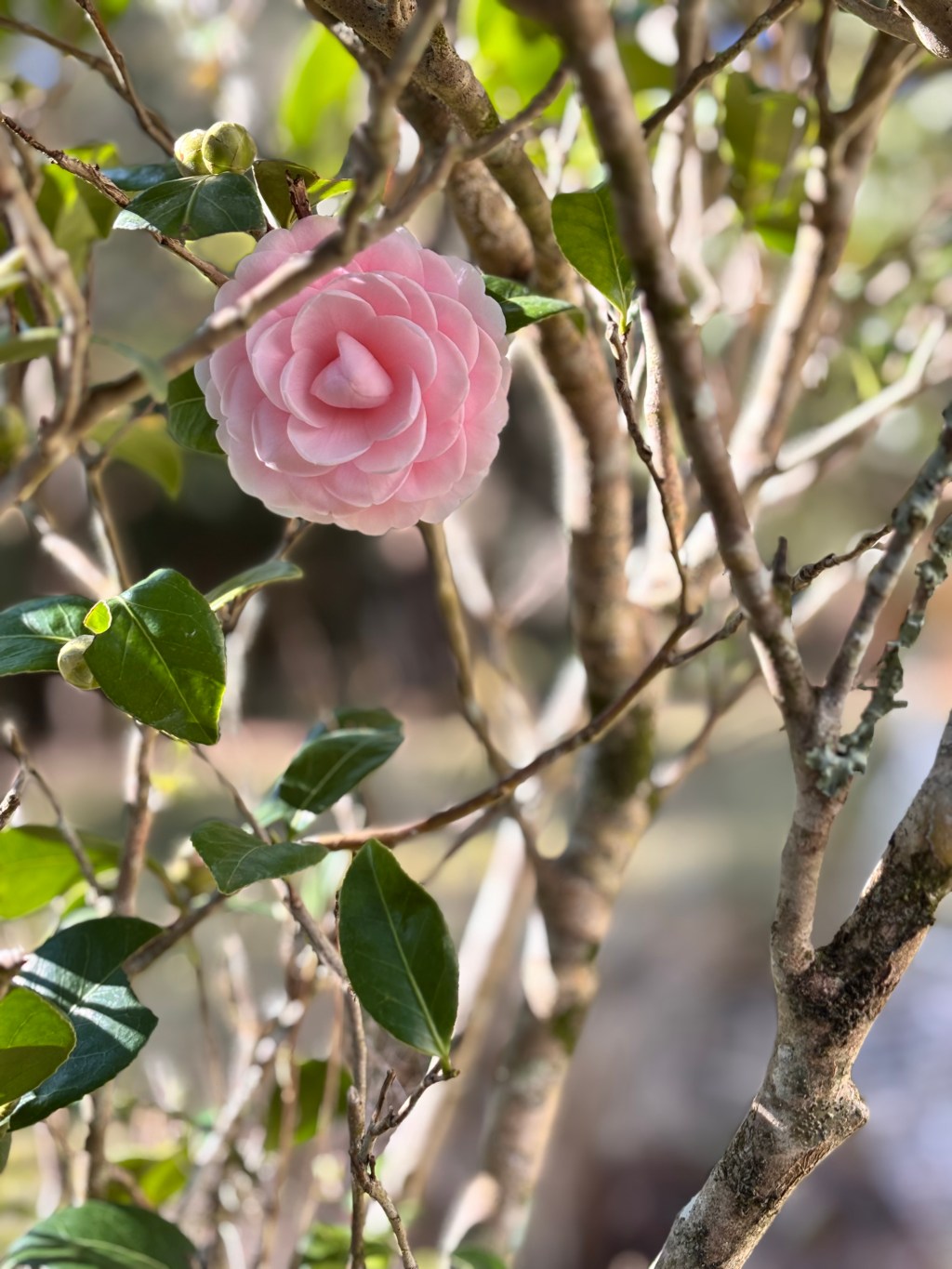
For some southern gardeners, cultivating, growing and showing camellias is serious business. I am not one of those gardeners, but my friend Sarah Williams is. So last January, when Sarah asked me and some friends to help with the set-up for a regional Camellia show sponsored by the Tallahassee Camellia Society, we were excited to get a glimpse inside the world of competitive camellia growing.
It was amazing – and a lot more than we expected.
On a cold rainy morning, camellia connoisseurs from all over North Florida and Georgia started showing up at the Florida Department of Agriculture’s Administrative complex before dawn to unload dozens of plastic containers filled with perfectly formed camellia blooms from their vehicles.
Once inside the building, they went to work, carefully placing each bloom in a tiny glass vase of water – making sure just the right amount of green leaf was poised on the rim. They then filled out a special card to identify the species and name of each flower and placed both on a lunchroom tray.
Our job as volunteers was to take the trays from the growers and carry them to the appropriately designated table in another room where they had to be lined up in neatly ordered rows and arranged alphabetically by categories and sub-categories. This was harder than it sounds for us novice volunteers (there are more than 200 species of camellias and there were multiple entries in every category). We moved back and forth between the growers and the tables nonstop for the next two hours.
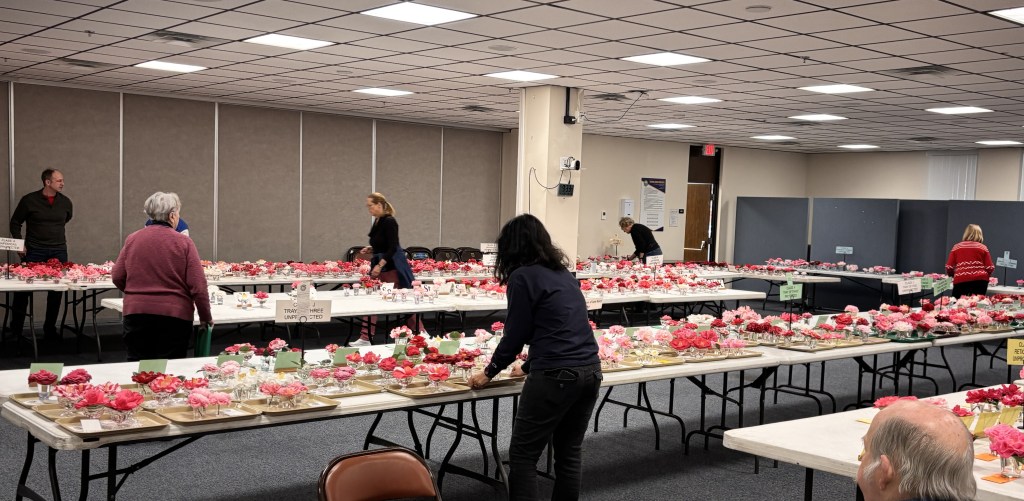
A particularly meticulous board member from the Camellia Society followed us around through the room like a foreman, inspecting our work, and quickly chastising us if vases were too close together or the alphabetization of the cards was incorrect. (Fortunately, he wasn’t near me when I accidentally tipped over a vase and frantically tried to put the flowers back just as they had been – oops!)
It was intense – and exhilarating. I had been introduced to aspects of the art and science of gardening I didn’t even know existed. These passionate cultivators had worked all year to present flowers that met the specfic standards established for their species. They weren’t accidental gardeners like me – they were scientists. They knew the pruning cycles, the correct nutrient mixes, grafting techniques and watering schedules required to produce an award-winning flower. They had their own vocabulary, and their outlook on life seemed tethered to the amount of rainfall and sun we received each season.
I even learned that some of the growers juice their plants with steroids to get better flowers. Yes, “camellia doping” is a thing. Those velvet-looking, perfectly symmetrical petals don’t just happen. And the growers are not shy about leveraging science to produce a blossom that will have a better chance of winning (both prestige and cash were on the line).
Did I mention they were competitive?
When I returned home from my camellia show adventure, I looked out at the row of struggling camellias in our backyard. They are remnants of a camellia garden I tried to create years ago, before I realized my gardening dreams would be shattered by the dozens of deer who thought my camellia bushes were their own personal breakfast buffet.
The surviving bushes were not beautiful – their lower limbs were stripped bare of leaves, but they still produced a few blossoms every winter. Inspired by the possibilities I had seen at the camellia show, I vowed to try to restore the surviving bushes to better health.
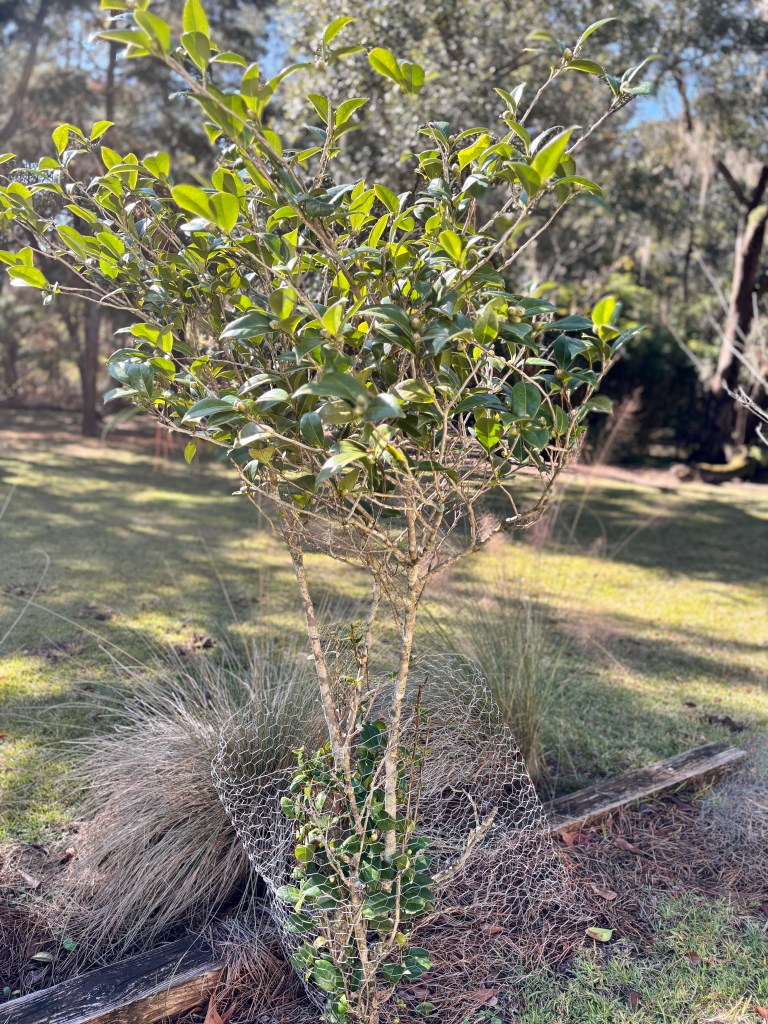
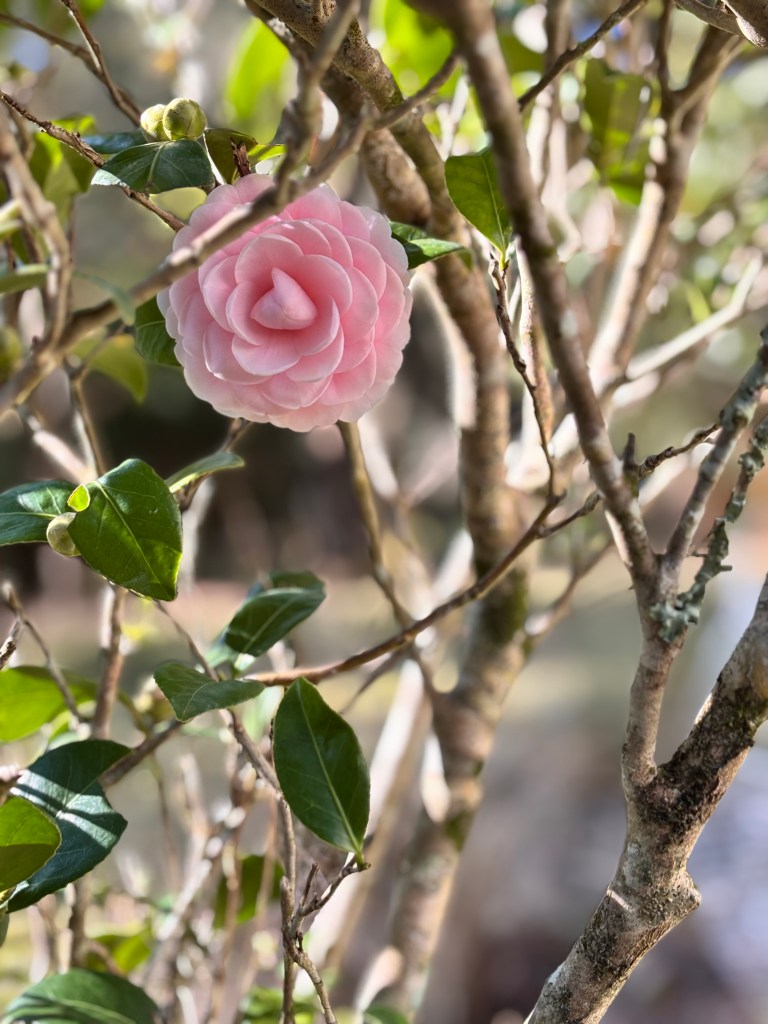
Eleven months later, they are starting to come back. The chicken wire I placed around the bases of the bushes to keep the deer away has allowed new leaves to grow and there are dozens of buds and even a few pink blossoms on the upper branches. I don’t expect my comeback camellias to produce any show-worthy flowers, but if there was an award for resilience, they would be contenders.
And in my opinion, resilience is its own kind of winning.
“Your beginnings will seem humble, so prosperous will your future be.” Job 8:7


 Glean Daily
Please share your own gleanings!