After a little bunny nibbled his way through our sweet potato crop last fall, I decided to try again with a different type of potato. I cleared the garden bed, raked in several loads of compost from our backyard bin and planted red potato seedlings in neat little rows in the dirt.
As soon as green leaves began sprouting up where the new potatoes were planted, I covered them with the netting I had waited too long to place over my sweet potatoes last summer to prevent that bunny from mowing them down (About Bunnies and Boundaries).
About a week later, I noticed lots of other green growth sprouting up around the red potato leaves – baby tomato plants, sunflowers, squash, beans, wildflowers – a haphazard sampling of everything we had composted from our garden last year.
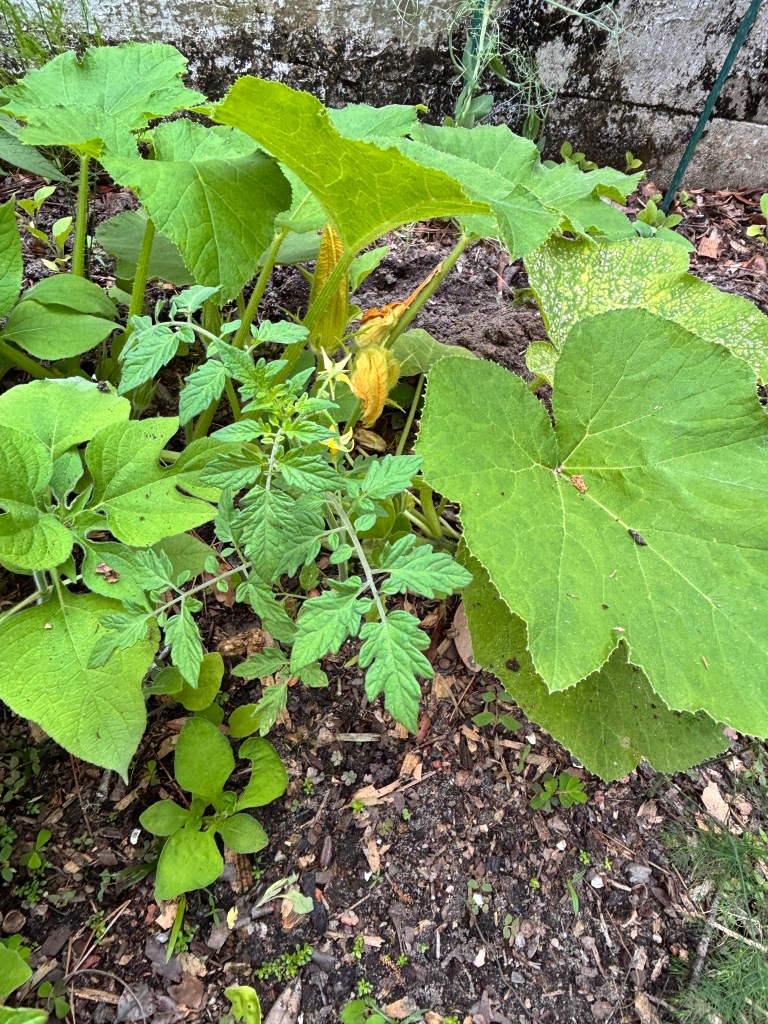
A better gardener might be horrified by the chaos, but I am more of an accidental gardener, and I can’t wait to see what will grow from last year’s compost.
I love the way the past can sprout up in the present and illuminate a whole new perspective on a situation.
This happened to me recently when I started giving piano lessons to my grandchildren. Before the first lesson, I looked for beginner books I could use to guide our lessons. To my surprise, I discovered the same book I learned from more than 50 years ago – John Thompson’s “Teaching Little Fingers to Play” was still in print.
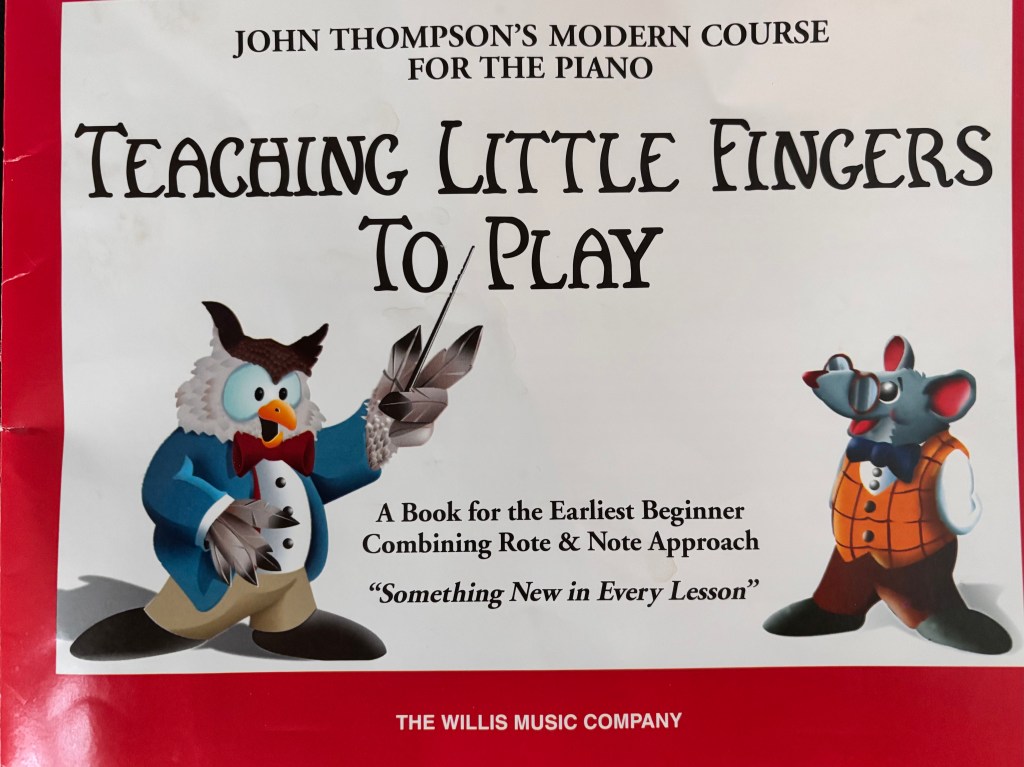
When the book arrived, I sat down to play a few of the simple melodies and was immediately transported back in time to a little room in the convent at Holy Cross School (now Academy) in Rumson, New Jersey.
My parents had signed me up for piano lessons when I was in the third grade. Once a week, I got to leave my classroom and enter the convent – the building where the nuns lived when they weren’t teaching school. This was a big deal (and a little scary) because the convent was a place of mystery and off-limits for students.
My piano teacher was Sister Mercy, an elderly nun who had been “retired” from the academic faculty and recommissioned as a piano teacher. It was just the two of us each week, in a narrow little room with an upright piano against the wall. I still remember the voluminous black skirt of her full-length habit (the only parts of her not fully covered were her hands and face) and the heavy black rosary beads hanging from the belt of her dress. There was always a balled-up tissue peeking out of the long sleeve of her bodice and I would have to dodge the little bits of food that flew out of her mouth when she spoke.
For that one hour each week, I wasn’t one of eight siblings vying for my parents’ attention. I wasn’t one of 25 students in a classroom trying to earn affirmation from the teacher. It was just me and Sister Mercy. She gave; I received. We didn’t become friends. I never even knew her real name (Mercy was the name she adopted when she took her vows as a nun.) She had to have been at least 75 years old in 1969, which means she had lived through two world wars and the Great Depression. But she never spoke about anything except the lesson of the day.
My parents didn’t sign me up for those lessons because they thought I was destined for piano greatness. It was more likely an indirect way to support the convent financially (my dad’s youngest sister was a nun). But with her gentle, often trembling approach, Sister Mercy unlocked the mysteries of the notes, lines and symbols on the pages of my music book and gave me the gift of music literacy.
I continued to take piano lessons through high school, but every new skill I learned was built on the foundation that Sister Mercy gave me in the third grade. I never had a chance to thank her for that, but I hope she is smiling when she hears my grandchildren play the same songs she taught me as a child, .
My third grade self never imagined I would want to grow up to be like Sister Mercy, a fragile woman living an obscure life in a convent. But here I am, and that’s exactly who I want to be.
I love the way your past can sprout up in your present and illuminate a whole new perspective on a situation.
“Start off children on the way they should go,
and even when they are old they will not turn from it.”
Proverbs 22:6


 Glean Daily
Please share your own gleanings!