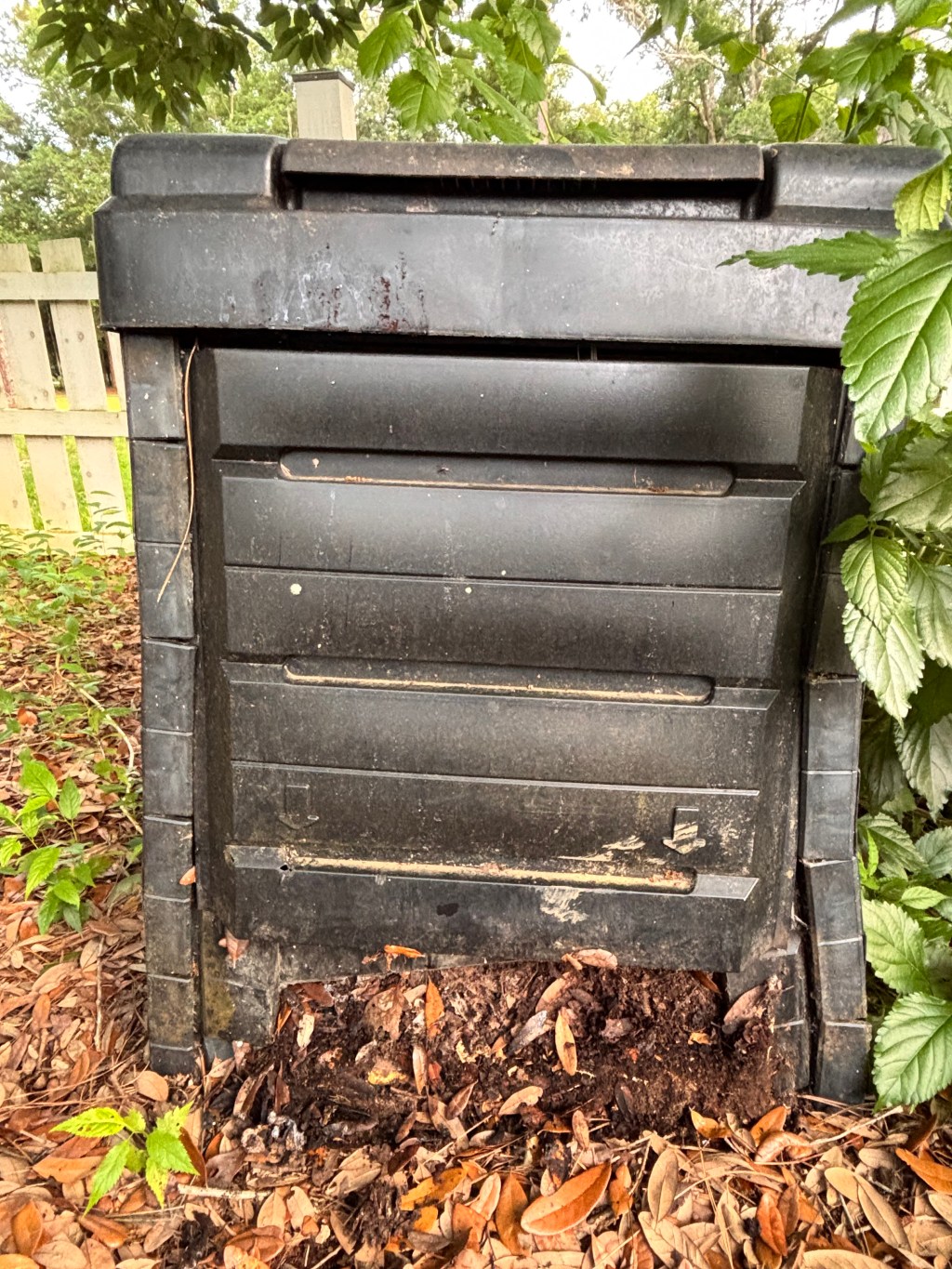
Composting can be pretty disgusting. I’m not saying it isn’t a great thing to do, but for me, it’s right up there with cleaning the bathroom or unclogging a shower drain. Composting involves getting up close and personal with dead and decaying matter – stirring it up periodically – and then patiently waiting for results.
Despite all that, we are a composting family (more correctly, we’re a family that composts) and the return on our encounters with slimy food and squiggly worms is well worth the effort.
We have a compost container in our kitchen where we regularly put fruit and vegetable scraps, eggshells and coffee grinds. When it’s full, we transfer the partially decayed contents to a larger compost bin in our backyard. But those are just the first – and easiest – steps in the process!
Composting isn’t just about piling up food scraps and yard waste (leaves, grass cuttings, dead plants) in a bin and waiting for the ingredients to magically transform into something useful for your garden. After you have started filling up your compost bin you will need to begin “engaging” with your dead and decaying discards.
The University of Florida’s Institute for Food and Agriculture Sciences (IFAS) extension office in our area provides the following advice:
“Continue to add layers of kitchen scraps and dry organic material as described and keep the pile watered so that it’s moist but not wet. Keep in mind: whenever your garden needs water, your compost needs water. If you hollow out an area in the middle of the pile, this can make watering more effective. During the warmer months, you should turn your pile with a pitchfork to mix the decomposing matter at least once a week or when the internal temperature has reached 150 degrees. In the colder months, the composting process slows down and you should only turn your pile about once a month. …” “Good compost will have lots of earthworms that help in the decomposition process and also help to aerate the soil in your garden.”
It’s a pretty amazing phenomenon to contemplate. Something that initially seems so useless (and offensive) can be repurposed into life-giving fertilizer that provides immense benefit to a future generation of plants and vegetables. It’s the cycle of life in smelly technicolor!
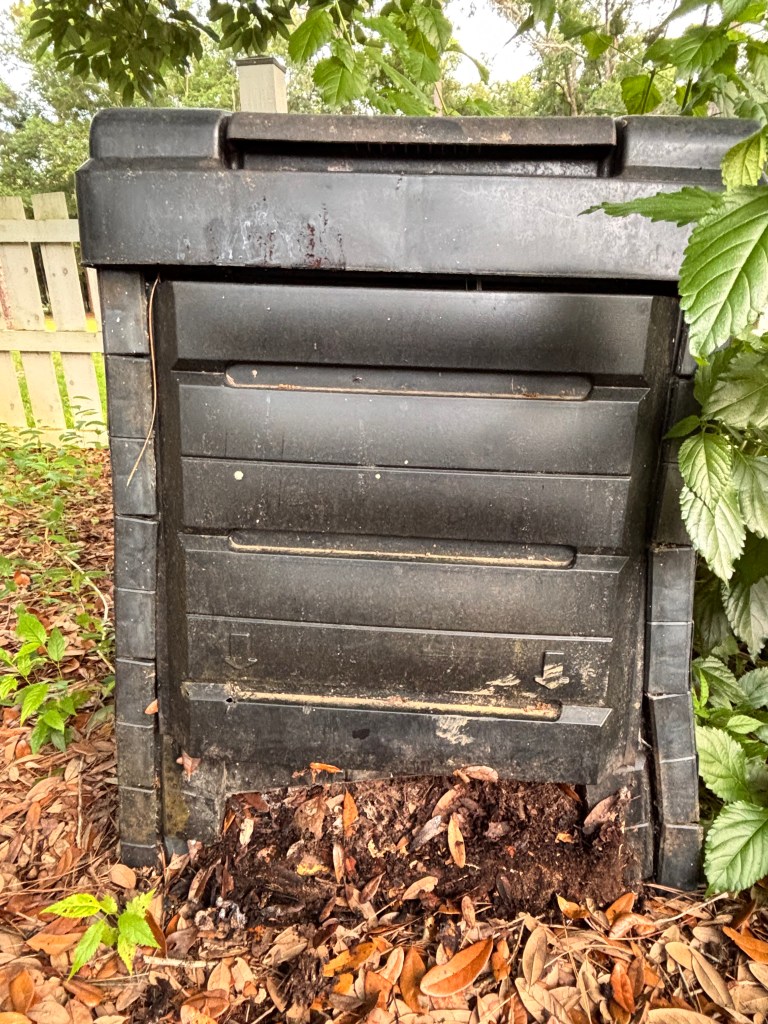
I would bet that most of us probably have “useless or offensive” stuff buried in our own human compost bins that we would prefer not to revisit. Bad things we have experienced that now reside somewhere in our subconscious.
But what if the passage of time could finally break down those difficult memories and transform them into insights and understanding that could be used for good? What if our repressed anger, fear and disappointments could become compost for understanding and compassion?
Garden compost needs to be tended, regularly stirred and balanced. Untended compost will rot and become toxic and is no longer useful in a garden.
Likewise, we can’t just bury painful memories and expect them to disappear. Hurt and pain also need to be processed, or they can become toxic and turn into anger and resentment.
Sharing the stories of our failures, disappointments and pain with other people can be unpleasant (just like working with decomposing food and yard matter). But transforming past hurts into authentic empathy can help someone who is dealing with a similar challenge know they’re not alone in their struggle. And our lived experiences can give another person confidence that they can – and will – eventually get to the other side.
So why waste your pain? Why waste your illness? Why not let the lessons you have learned from a terrible loss fertilize something positive for someone else who is suffering now?
Think of it as a rebalancing of the fates – tipping the scales back in favor of growth and goodness. Putting things in their proper place and graduating from from victim to victor.
“As iron sharpens iron, so one person sharpens another.”
Proverbs 27:17


 Glean Daily
Please share your own gleanings!