
I have always had a special fondness for red poppies. It isn’t just their eye-catching color – the contrast created by the brilliant red petals surrounding their deep black centers.
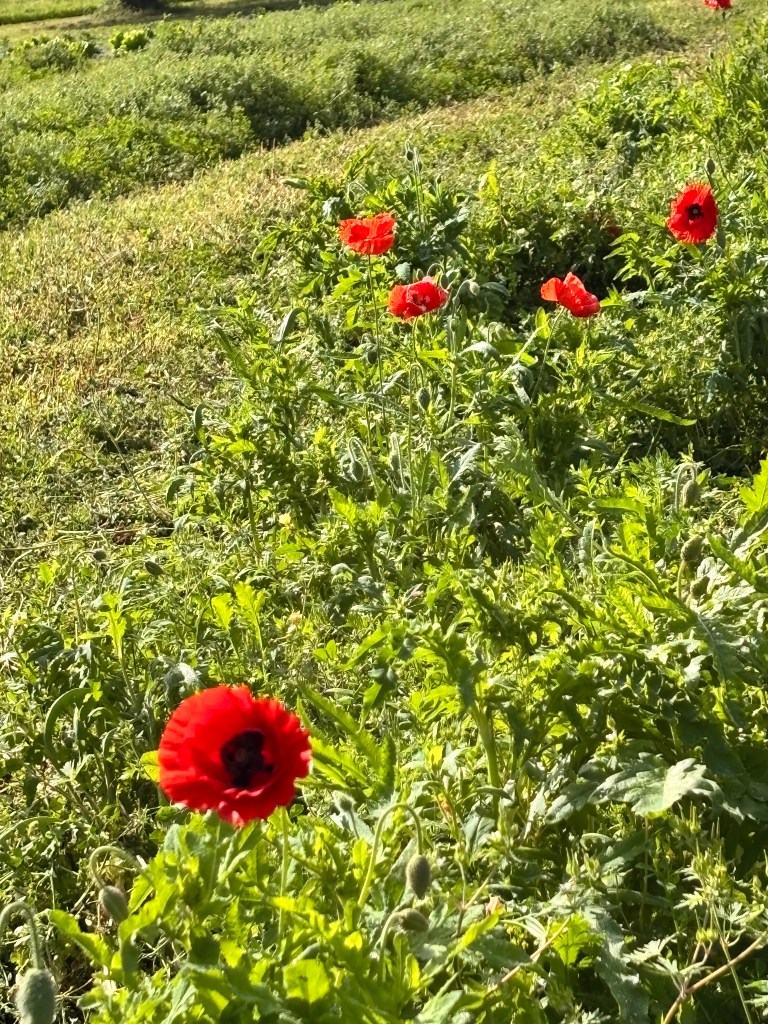
It isn’t the way their long and delicate stems allow them to sway gracefully back and forth with the wind – or that they are called “coquelicots” (kohk-lee-ko) in French – which is such a fun word to say!
There is something else about poppies that draws me to them. If flowers could be assigned character traits, poppies would be gritty. Despite being objectively pretty and delicate-looking flowers, poppies are not “girly girls”, like lilies or orchids.
They don’t need a lot of maintenance – and they tend to thrive in the most unlikely soil conditions.

I have seen hundreds of poppies push themselves up out of random compost piles in the south of Italy or along the shoulder of a busy highway in Normandy, France – in full and vivid bloom.
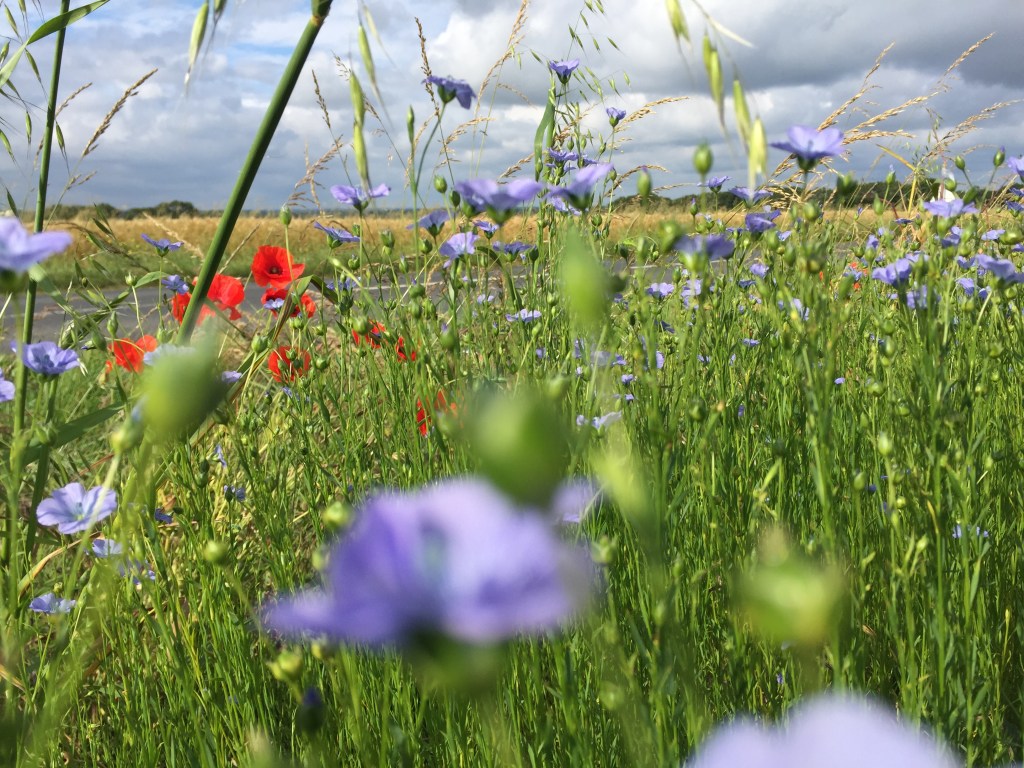
But every time I have tried to grow poppies in a pot or flower bed in my backyard, it’s been an exercise in frustration. A few wimpy blooms, then the plant gives up. I’ve concluded they prefer chaos and adversity to a more controlled and fertilized environment.

Today is Memorial Day in the United States – a time to remember and to be thankful for the individuals who have died while serving in the U.S. military. I think about poppies on Memorial Day because I am reminded of the poem, “In Flanders Fields” by John McCrae – a brigade-surgeon in the First Brigade of the Canadian Field Artillery.
The poem was written while he was stationed in the trenches near Ypres, Belgium during World War I. His poignant verses describe the field of makeshift graves blooming with wild red poppies McCrae came upon during the bloody Second Battle of Ypres in April 1915. It’s a stunning contrast: brilliant red blooms stretching toward the sun and lifeless bodies buried in the dirt.
Although McCrae died less than three years after writing “In Flanders Fields”, his poem took root and blossomed all over Europe, Canada and the United States and the poppy became a symbol of remembrance for fallen soldiers.
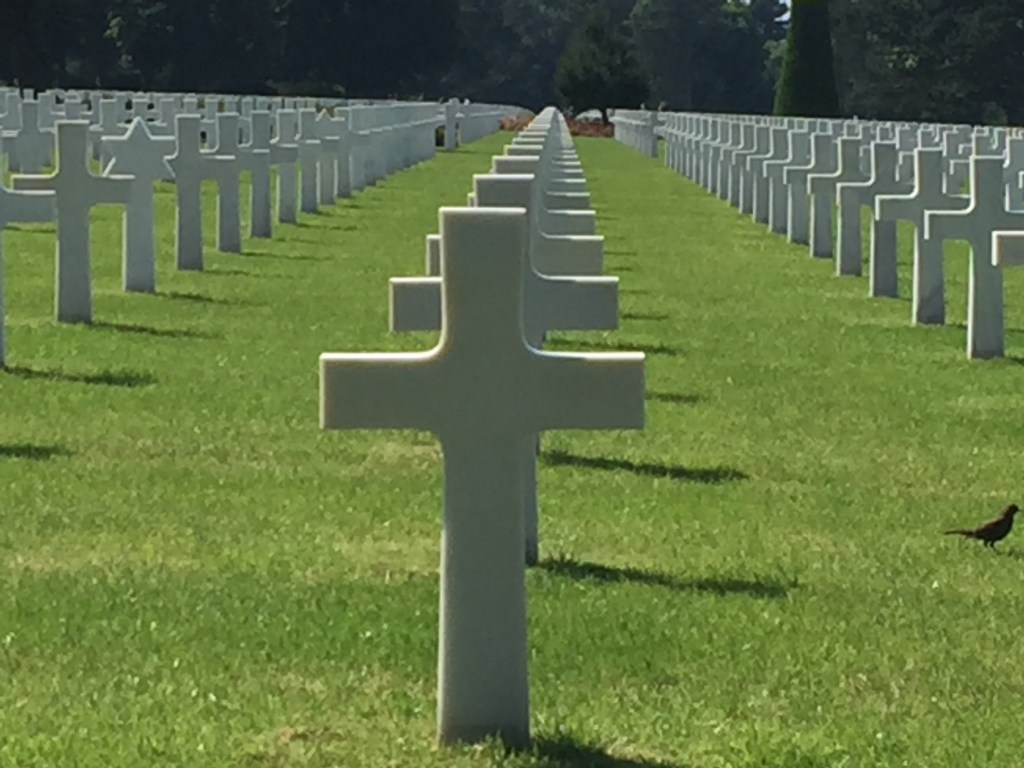
In Flanders Fields
By John McCrae (1872 –1918)
In Flanders fields the poppies blow
Between the crosses, row on row,
That mark our place; and in the sky
The larks, still bravely singing, fly
Scarce heard amid the guns below.
We are the Dead. Short days ago
We lived, felt dawn, saw sunset glow,
Loved and were loved, and now we lie
In Flanders fields.
Take up our quarrel with the foe:
To you from failing hands we throw
The torch; be yours to hold it high.
If ye break faith with us who die
We shall not sleep, though poppies grow
In Flanders fields.


 Glean Daily
Leave a reply to unabashedly069b4de341 Cancel reply