
Last week my husband and I went to the local Tractor Supply store with our four grandchildren (ages 8, 9, 10, and 11) to let them each “adopt” a baby chick. It was the first day of a weeklong overnight summer camp we host for them every year and although we will be ultimate keepers of the chicks, the kids would be their first caregivers.
The excitement in the car on the way to the store was off the charts. As they anxiously tried to imagine what the baby chicks would be like, they pelted us with questions – and we did our best to guess at answers, since we were new to the world of backyard chickens ourselves.
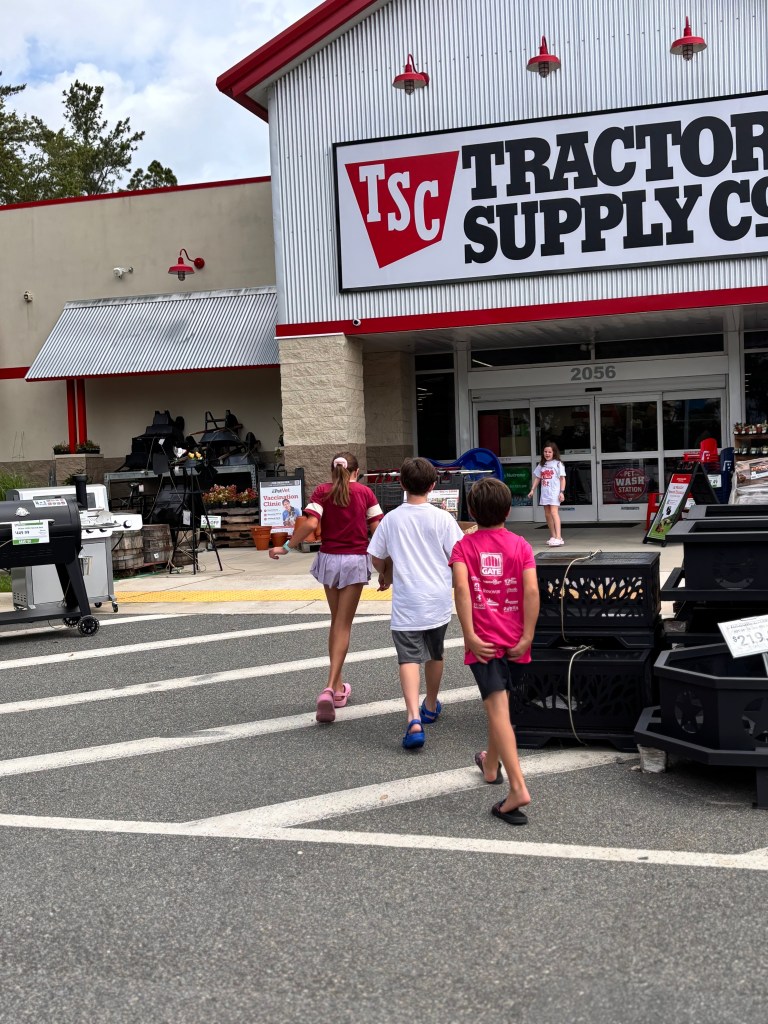
Inside the store, the kids flocked around the large cage where the baby chicks were brooding under a heat lamp. They carefully observed each of the nervous little chirpers before selecting the lucky chick they would take home. Leo and Hayden selected “Jersey Giants” and Mycah and Josephine chose “Black Sex-links”. All are supposed to be females that will hopefully become egg layers.

As the very patient employee placed the precious birds into a cardboard travel box (which is ironically very similar to a Chick Fil a carryout box), Hayden peeked inside and whispered to the noisy, nervous chicks, “don’t worry, you are going to have a good life”. Our grandkids were smitten – and determined to take the very best care of their new babies.

Back at the house, the chicks were placed in our homemade brooder on the floor of the family room with a heat lamp, feeder and water station. Within a few days, the Jersey Giants – Bubby and Fluff – had grown noticeably bigger. The Black Sex-links – Midnight and Squirt – had been smaller to start with, but Midnight was now larger and stronger than Squirt. In fact, it didn’t look like Squirt was growing at all, and she seemed to want to sleep most of the day. We assumed she was just a slow developer and hoped she would soon catch up with the others.
When our grandkids went back to their parents at the end of the week, Bubby, Fluff and Midnight had more than doubled in size. Their feathers were coming in and they were looking more like pullets than chicks. But not Squirt. She simply wouldn’t grow and showed no interest in eating or drinking.
We frantically researched “failure to thrive” syndrome in baby chicks and learned that it is not uncommon in baby chicks and can be caused by numerous factors. Some chicks who experience the condition will come through it and grow to full size; others will not. The mortality rate is high because the strugglers don’t eat or drink enough to sustain themselves.
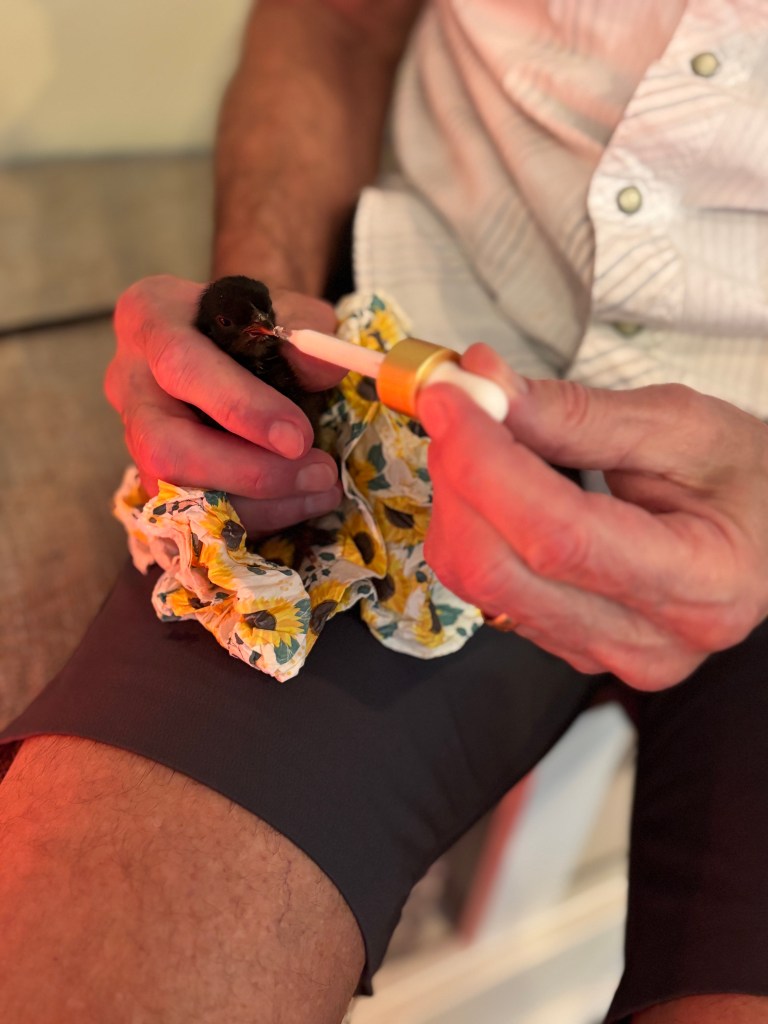
So, we softened some of the starter chick feed in water to make it easier for Squirt to eat. We fed her water mixed with honey from an eyedropper. I even dug up worms in my garden and fed them to her in little pieces from my finger. Her response was feeble, but she did eat and drink a little.

If she was just genetically predisposed to be small, we were okay with that. We just wanted to give her a chance. And we didn’t want to have to tell our sweet granddaughter Mycah who had grown to love Squirt because of her small size (she has an affinity for “overcomers”) that her little fighter didn’t make it – on our watch.
I also remembered Hayden’s earnest pledge to give the chicks a good life and I didn’t want to let him down. Squirt could remain tiny and weaker than the others and still have a good life, right?
The situation reminds me of my friend DJ. DJ was 15 when he came into the foster care system in Tallahassee. He was born with Duchenne Muscular Dystrophy, a rare genetic disorder that causes progressive muscular damage and weakness. The median life expectancy for someone with Duchenne is 22 years.
DJ and his sister had been removed from their parents’ home because of the abuse and neglect they suffered there. I became DJ’s court-appointed Guardian ad Litem in 2016 and my husband and I became his co-Guardian Advocates when he turned 18 and was legally an adult.
When I first met DJ, he could no longer walk but he got around pretty well in a lightweight manual wheelchair. As his disease progressed and his muscles deteriorated, he transitioned to a power wheelchair he could operate with a joystick.

I knew the day I met DJ that he probably wouldn’t live a long life. And because of his accompanying cognitive and emotional disabilities, I expected his options for things like learning to drive a car or buying a house would be limited.
But we loved DJ for who he was, and we were determined to do what we could to help him have a good life.
That was easier said than done.
Our local foster care system was ill-equipped to provide a safe and nurturing living environment for a person with DJ’s complex medical and behavioral needs. We tried to advocate for his best interest and safety, but DJ wound up being physically and emotionally abused by the people who were paid to protect him.
We struggled to understand why he had been dealt such a bad hand – born to parents who couldn’t keep him safe and healthy, with a body that was wasting away on him in a system that dehumanized him because he was “high maintenance”.
In February 2023, DJ died peacefully when his heart stopped beating in the middle of the night. He had fought valiantly, but his disease defeated him. DJ didn’t live a typical life, but he won the hearts of many people with his tenacity, sense of humor and determination to play the best hand he could with the cards he was dealt.
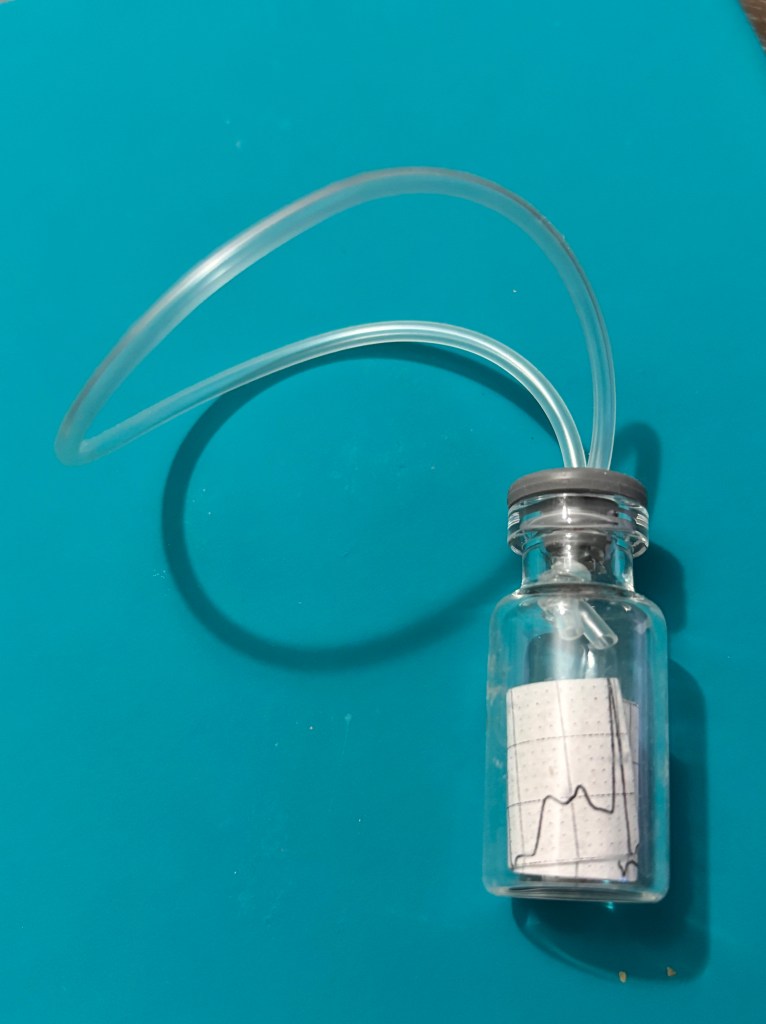
Last night, Squirt’s little heart stopped beating. For the ten short days she was in our care, we really tried to help her grow and become strong. But like DJ, the genetic deck was stacked against her and her fragile body gave up.
We never thought we could cure DJ of his terminal condition. And we knew we couldn’t keep Squirt alive if she wouldn’t eat. But sometimes it’s okay to dive into situations you know will break your heart – because that’s what really living is all about.
Do not withhold good from those to whom it is due,
when it is in your power to act.
Do not say to your neighbor,
“Come back tomorrow and I’ll give it to you”
when you already have it with you.Proverbs 3:27-28


 Glean Daily
Leave a reply to It’s Not About the Eggs – Glean daily Cancel reply