
As a general concept, raising chickens in our backyard seemed like a good idea. We had the space, the price of eggs was getting crazy expensive, we knew other people who were doing it…
But lots of things can seem like good ideas when you only have a vague understanding of what it will actually take to bring them to fruition.
My husband was definitely hesitant at first. He tends to take a “measure twice, cut once” approach to tackling new projects. I tend to jump into moving rivers and hope I can figure out how to get back to shore afterwards. We had been dog parents for many years, but raising chickens was completely foreign territory for us. Brent’s reluctance was justified; I was already imagining how we could convert our bocce court into a lighted chicken run…
Then I stumbled on the perfect strategy to win him over. I suggested we make the acquisition of chickens an educational experience for our grandkids during the summer camp we host for them each year. I described how exciting it would be to let the kids pick out their own baby chick on the first day of camp!

My strategy worked. The discussion was no longer about whether or not we wanted to raise backyard chickens. It was about whether we wanted to give our grandkids the thrill of selecting a baby chick and watching it grow for a week. Who could say no to that?
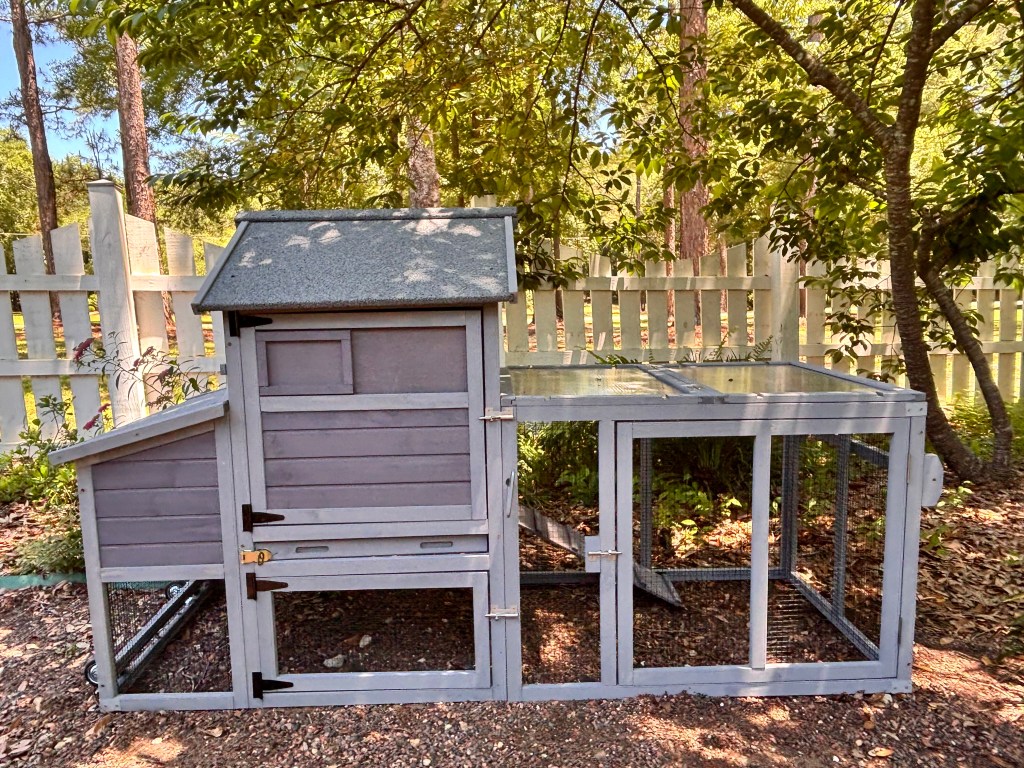
So, we bought and assembled a two-story chicken coop and set it up in our backyard. Then we learned that baby chicks can’t live in a coop for the first several weeks of their lives. They have to “brood” in a protected environment under a heat lamp until they have enough feathers to keep themselves warm outside.
The Tractor Supply store was happy to sell me a special brooding kit with all the equipment we needed. We lined a large metal washtub with pine shavings and set it up in our family room. We were ready.

On the first day of camp, four ecstatic grandkids carefully selected and named their own baby chicks – Squirt, Fluff, Bubby and Midnight – and the time they spent with those little birds was the absolute highlight of their week.

When our grandkids went back to their parents, there was no returning to the normal rhythm of our lives. Our new downy housemates required daily time and attention from us – and a whole lot of learning!
We hit a rough spot early on, as I shared in my blog post entitled Squirt (we have since have adopted another baby chick – also named Squirt – who is thriving and full of life). As hard as it was to lose that baby chick after our frantic attempts to get her to eat and drink – I think the experience transformed us from chicken caretakers to chicken parents.
We had jumped into the moving river.

Since then, we’ve received and consumed voluminous amounts of practical advice about raising baby chicks – and our vocabulary is expanding.
- We know how to take care of pasty butt, a common condition in baby chicks that can block their “vent”, which is where waste and eggs are expelled.
- We learned that chicks like to sleep off the ground, so they roost – perched on bars or other raised structures while they sleep.
- A chicken tractor is not a vehicle. It’s a chicken coop with wheels that allow you to move it around to new spots so the chickens can find fresh things to eat and explore (and you can manage the poop that builds up under the coop).
But beyond the vocabulary and the mechanics of feeding and protecting baby chicks, I have gleaned some unexpected insights about relationships in the process. (And I thought this was just about the eggs!)
- To keep those little chicks safe and healthy, we needed to adapt our lifestyle to make time and space for them. A few weeks into the adjustment, chicken time became part of our new routine and caring for the chicks has become a part of who we are – another part of our life that brings us joy, makes us laugh, get frustrated, and lose sleep. And we are loving it!
Making room for a new relationship can be challenging. You may have to adjust your routines and give up some of the time you used to call your own. But invariably, your life will be richer for it.

- Chickens are skittish by nature – there’s a reason people who scare easily are called chickens! It was nearly impossible to get those chicks to eat from my hand or let me pick them up at first. But we are slowly learning how to earn their trust and make them feel safe.
Creating trust in a relationship takes time, patience and a willingness to see the world through someone else’s eyes and appreciate their unique perspective.
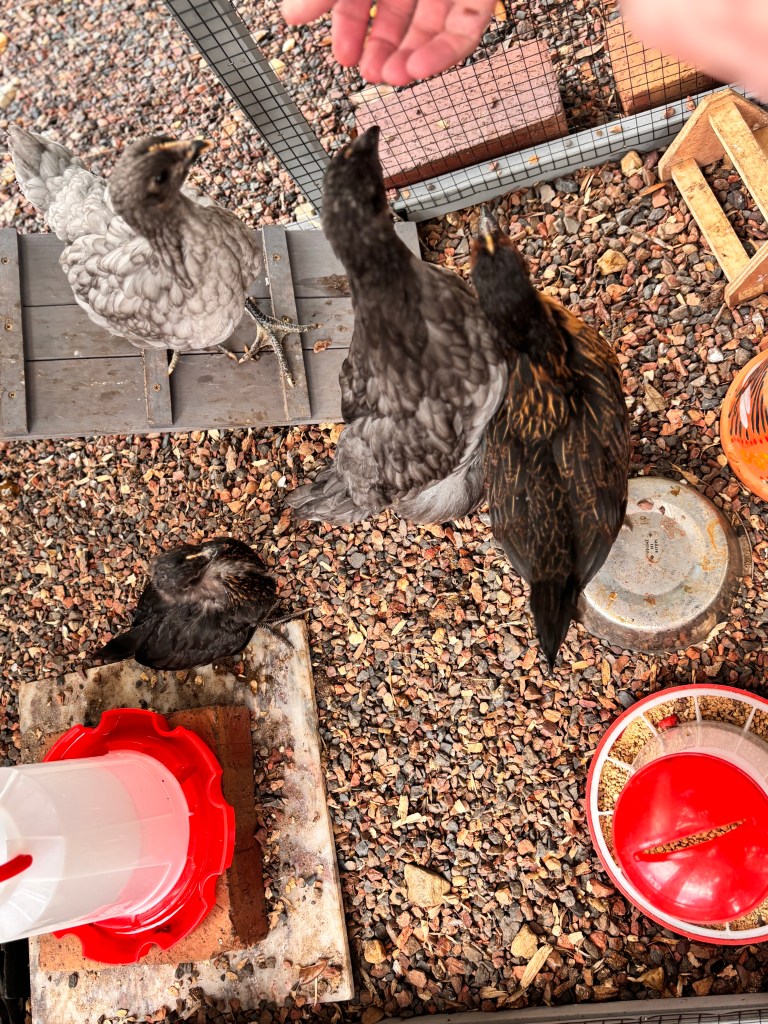
- Raising chickens isn’t glamorous – it involves cleaning and refilling dirty water trays, scooping up poop, running in circles after them when they escape and cleaning pasty butts.
Human relationships also take time and effort – and they can be very messy. But they can also feed our souls in deeply satisfying ways that nothing else can.

We became backyard chicken people because we were excited about giving our grandkids a new experience and having a regular supply of fresh eggs for ourselves and our friends. But 6 weeks into this relationship, we’re not thinking about eggs (besides, it will be at least another 3-5 months before they will start producing – something else I didn’t know when I jumped into this!) We are delighting in the journey those birds are taking us on – and the lessons we are learning from them.
Eggs or no eggs.


 Glean Daily
Leave a reply to chay012 Cancel reply