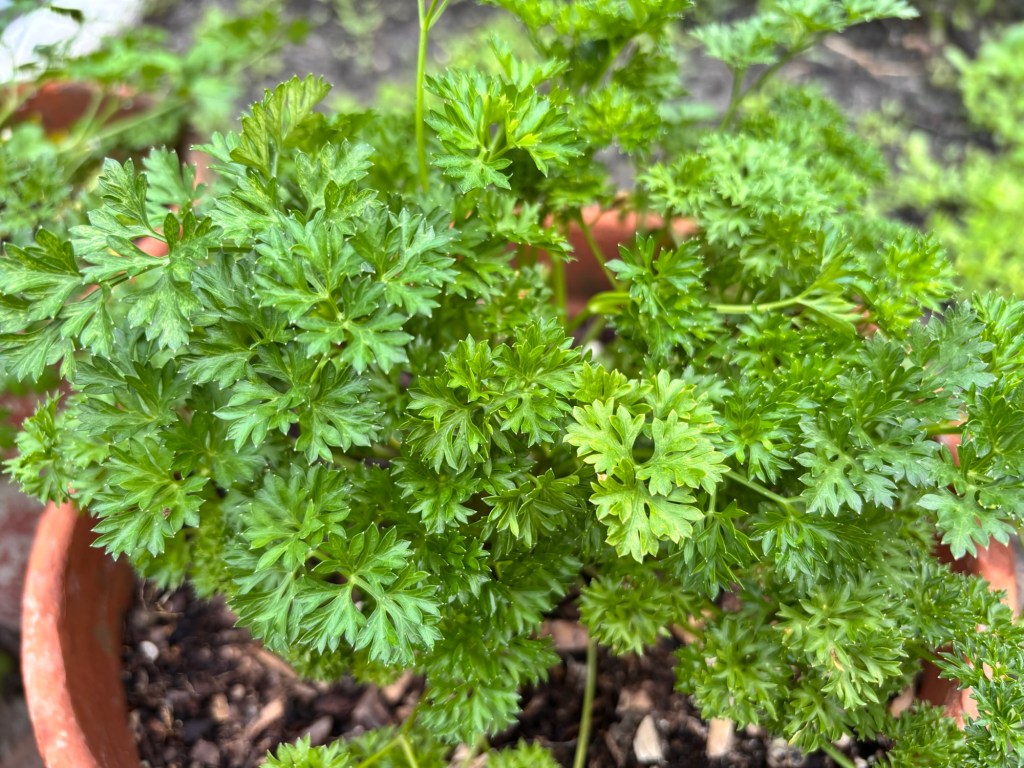
I like to plant seasonal vegetables and herbs in terra cotta pots so I can try new things (and limit my risk of failure) in a small space. When my potted experiments die back at the end of a season, I just pull the spent leaves and stems out of the dirt and fill it with something else.
Earlier this spring, I planted parsley seeds in one of my dirt-filled pots. After making a shallow bed for the seeds, I covered them with soil, added some fertilizer and within weeks, bright curly parsley leaves had rewarded my efforts.
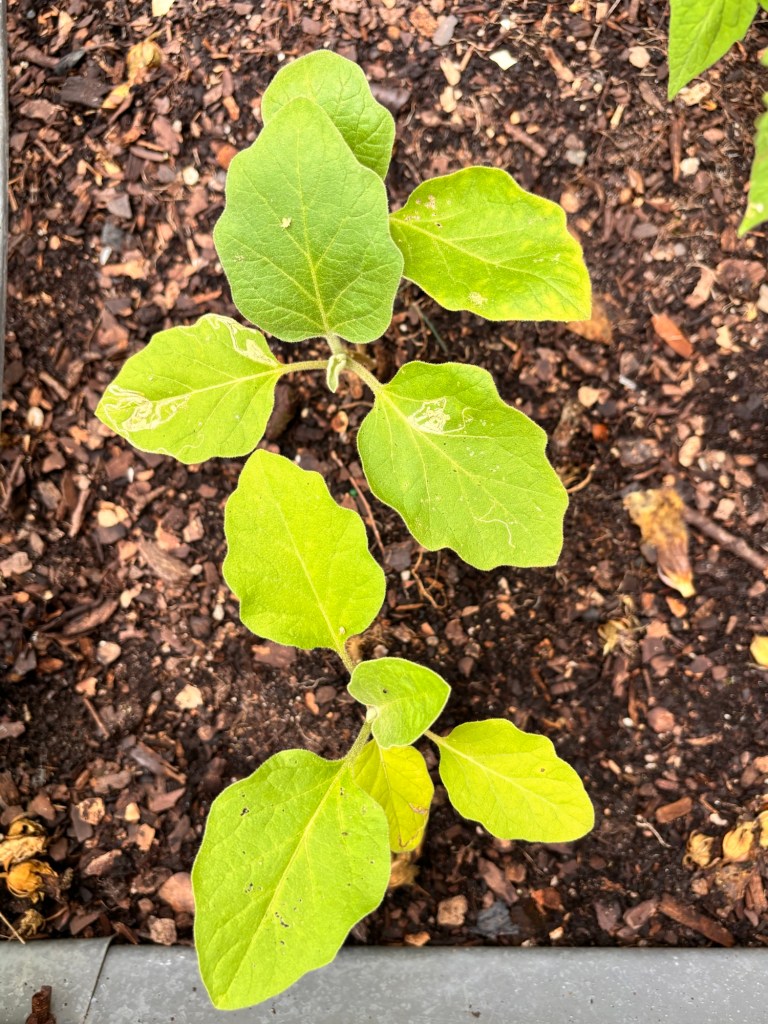
But then I noticed some odd leaves were growing in the pot alongside my parsley. I pulled the intruders out – assuming they were weeds or a stubborn remnant of whatever had lived in there last year – and considered the problem solved. But those feisty leaves grew back. And they must have been stealing water and nutrients from my parsley plant, because its new leaves were starting to turn yellow. So I grabbed a little shovel, dug deeper into the pot and pulled out that rando plant – along with its ambitious root system.
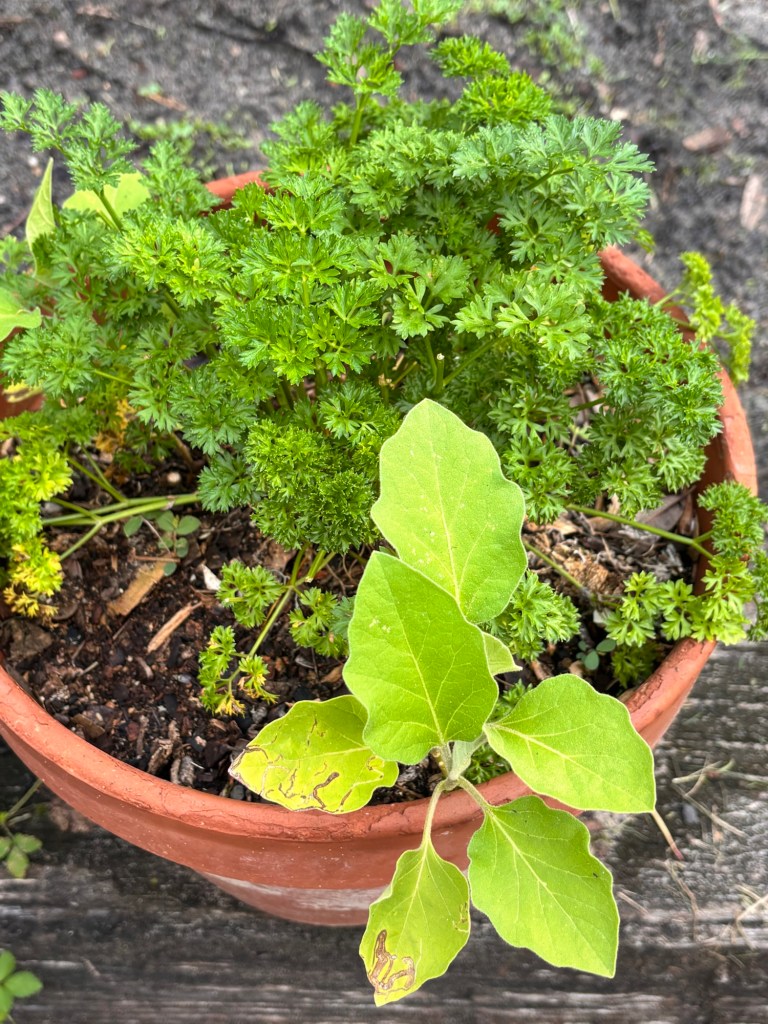
A volunteer “something” invades my potted parsley.
I know successful gardening requires thoughtful preparation, planning and waiting, but I am usually too impatient to do the type of advance work that’s needed to create an ideal environment for healthy growth. In my rush to transition from one season’s plantings to the next, I typically wind up placing new seedlings in a bed of exhausted soil that is also a graveyard of still-decomposing plant life.
Sometimes the bonus plants that pop up out of the prior year’s unamended soil can be a pleasant surprise. But often their roots wind up dominating a space and preventing the new plants from fully developing.
I met a friend for coffee recently and our conversation made me realize that the way I garden is very similar to the way I live my life. Becky and I have been “exchangers of pleasantries” for many years. We know a lot of the same people, we attend the same church, but we had never taken the time to learn one another’s stories.
We were hoping to remedy that over coffee. We enjoyed a fun, but asymmetrical conversation – which is my specialty. I can be really good at asking other people questions about themselves, but I tend to dodge the same types of questions about myself.
So when Becky asked me, I offered a sanitized version of “how I got here” but fell far short of exposing the parts of my past that still cause me shame or the hurts and losses that continue to eat away at my sense of self.
By contrast, when I asked Becky the same question, I was blown away by her candor and the grace with which she shared past hurts, insecurities and regrets. I was even more impressed with how thankful she is now to be able to use those difficult memories to encourage other women and men who may be experiencing similar challenges. People who might be afraid to share their unsanitized stories for fear of rejection. People like me.
Becky’s wasn’t a sad story – it was a comeback story. She didn’t bury her regrets or the hurts she experienced as a young woman in the dirt. She exposed them to the light of day and neutralized them in the process. They are now key elements of a Master Class she can teach on resilience, grace and redemption.
Becky’s story could be mine, too – if I could summon the patience to be a better gardener (person). If I could be brave enough to dig up the graveyard of negative memories and disappointments from my past, toss out their roots and let the sun do its rejuvenating work.
Decaying plants aren’t worthless; if placed in the right environment, they can become vital compost that nourishes new growth. It’s the same with the bad stuff we have all experienced. And what else are we supposed to do with all that yuckiness? We can’t un-feel a hurt, recover what’s no longer there or take a do-over on bad decisions.
I just need to start viewing my past, my present and my future as interdependent parts of a single continuum – and then toss in a heavy dose of forgiveness, pray for grace and allow my mistakes and regrets to be used for good in someone else’s life.
“You intended to harm me, but God intended it for good to accomplish what is now being done, the saving of many lives.”
Genesis: 50:20


 Glean Daily
Please share your own gleanings!